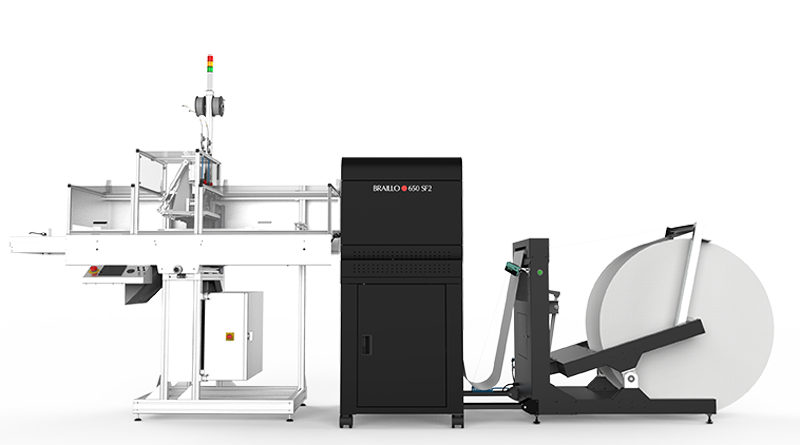
Print The Highest Quality & Most Legible Braille
The Importance of Braille Height & Location
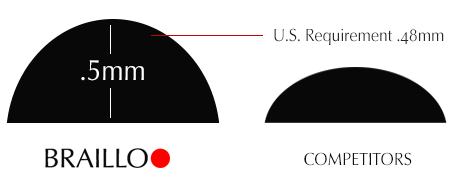
One of the most important characteristics of high-quality braille is the height of each braille dot. Inconsistent or low-profile dots are difficult to read, while properly raised dots ensure a pleasurable reading experience. Dot height is so critical that many countries require a minimum of 0.46 mm for embossed braille on paper. For this reason, all Braillo braille printers consistently emboss dots a minimum 0.5 mm in height.
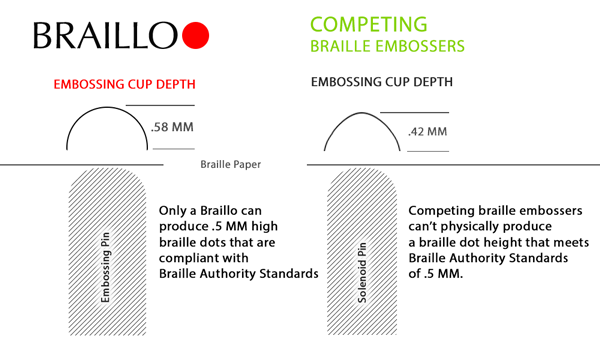
When producing braille documents for governments and clients worldwide, only Braillo ensures compliance with these standards. While other manufacturers may claim their machines can emboss 0.5 mm dots, in reality, their equipment lacks the capability—something clearly demonstrated in the images below.
A Rich Reading Experience Through Braille Dot Height
Have you ever tried to read a printed document where the ink was running low, leaving parts of the text light and unreadable? This is very similar to what happens when consumer-grade, solenoid-based braille printers are pushed to production-level speeds and long duty cycles. These machines were designed for light-duty braille printing—ideal for home or small-scale use—but should never be confused with true production braille embossers like those offered by Braillo.
Consumer-grade braille printers are easy to identify: they resemble standard PC printers, are made of lightweight plastics, and have smaller printing components. Some manufacturers may even combine 2–4 of these machines into a larger enclosure and label it a “production embosser,” but this is not comparable to a Braillo production embosser. When pushed to high speeds or extended use, these printers quickly reach their limits. The resulting braille dots become inconsistent, dot heights vary, spacing and placement go awry, and the embossed text becomes extremely difficult to read.
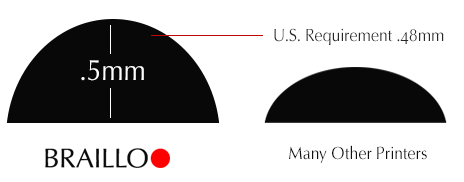
Worse, many printers on the market intentionally create lower braille dot heights. While this may slightly increase embossing speed, it comes at the significant cost of readability. Misplaced or low-profile braille dots are analogous to trying to read faded or inconsistent text with your eyes—a frustrating and exhausting experience, as illustrated in the example below.

Standards for Braille Dot Heights
| DOT HEIGHT MM | |
|---|---|
| American Library of Congress | 0.5 |
| American National Library for the Blind | 0.5 |
| English Interline | 0.46 |
| English Interpoint | 0.46 |
| German | ≥0.5 |
| Italian | 0.5 |
| Japanese | 0.5 |
| Latvian | 0.45 |
| United Kingdom | .50 |
| Standard American | 0.48 |
| Swedish | 0.25 |
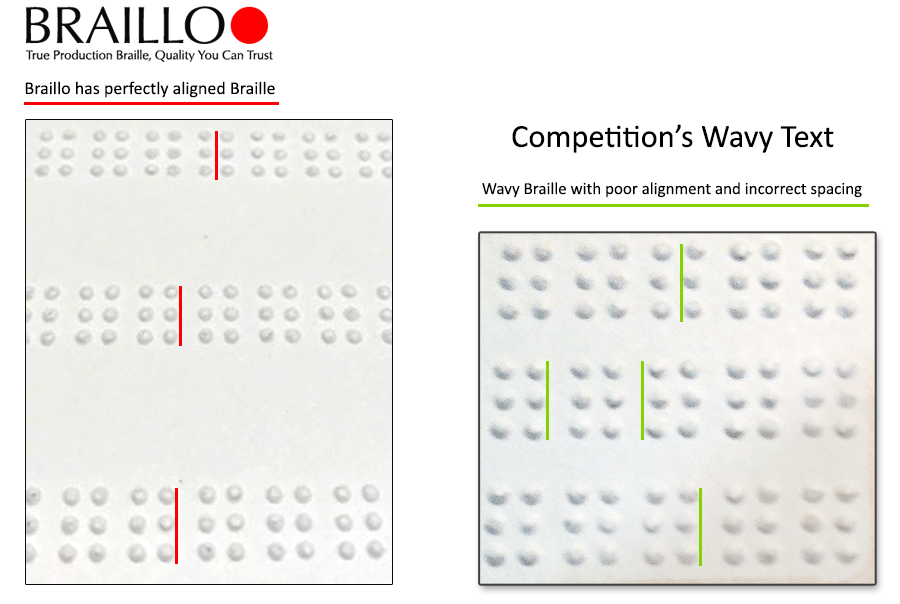
Braillo Braille is Perfectly Aligned
Braillo braille is widely recognized as the easiest to read, and the reason is simple: our braille is embossed at the proper height and perfectly aligned. When braille characters are misaligned, readers must guess words or stop to reread sentences, slowing comprehension and creating frustration.
Look closely at the image to the left (click to enlarge) and you’ll notice that our competitors’ braille output is wavy, with dots in rows and columns misaligned. In contrast, Braillo dots are exactly where they should be, line after line.
Would you risk delivering poorly formatted braille with low dot heights that fail to meet a country’s standards, or braille characters in the wrong locations? With Braillo, you can produce braille documents efficiently, with superior formatting and dot heights meeting, or exceeding, government requirements. Every Braillo embosser comes with Duxbury braille translation software to ensure accurate text-to-braille translation, and an industry leading 4 year braille printer warranty.
Braillo Production Braille Printers Are Built for High Volume, High Quality Braille Printing
Braillo braille printers are built with precision-engineered, high-strength metal components and fixed embossing pins. This design virtually eliminates lateral movement during embossing, allowing for continuous, high-speed operation while maintaining superior braille alignment and consistent dot height.
Using a Braillo to emboss braille ensures a rich, accurate reading experience for your customers while meeting the highest formatting standards required by governments worldwide.
Braillo Braille Printers
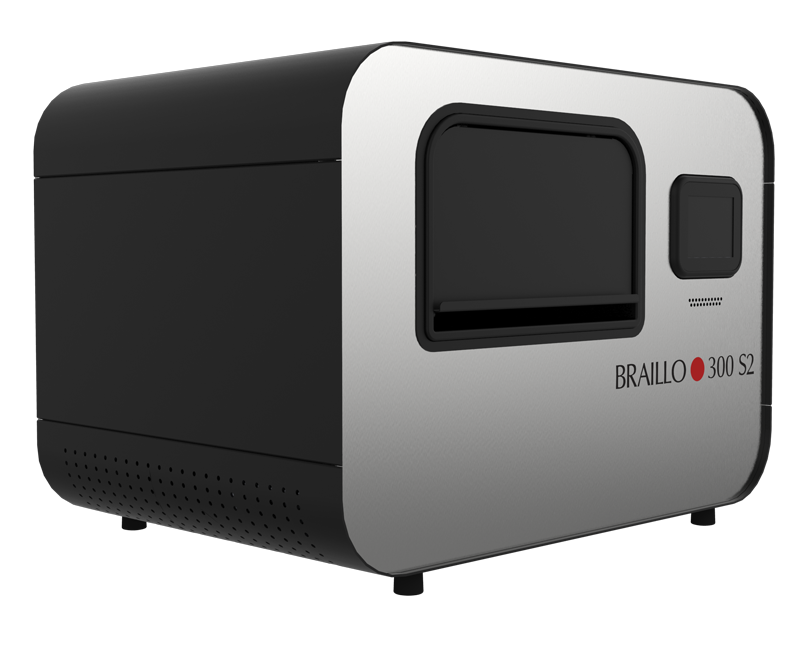
Braillo 300 S2
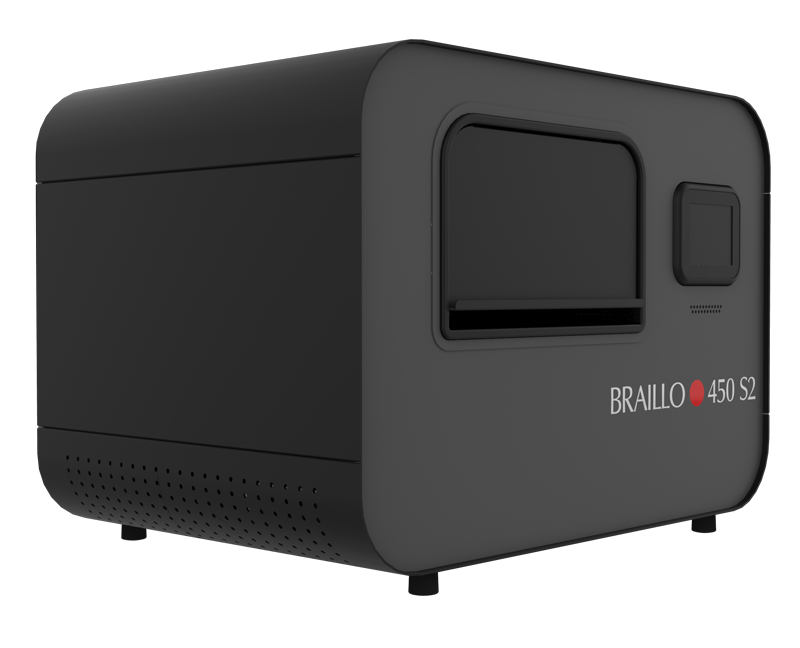
Braillo 450 S2
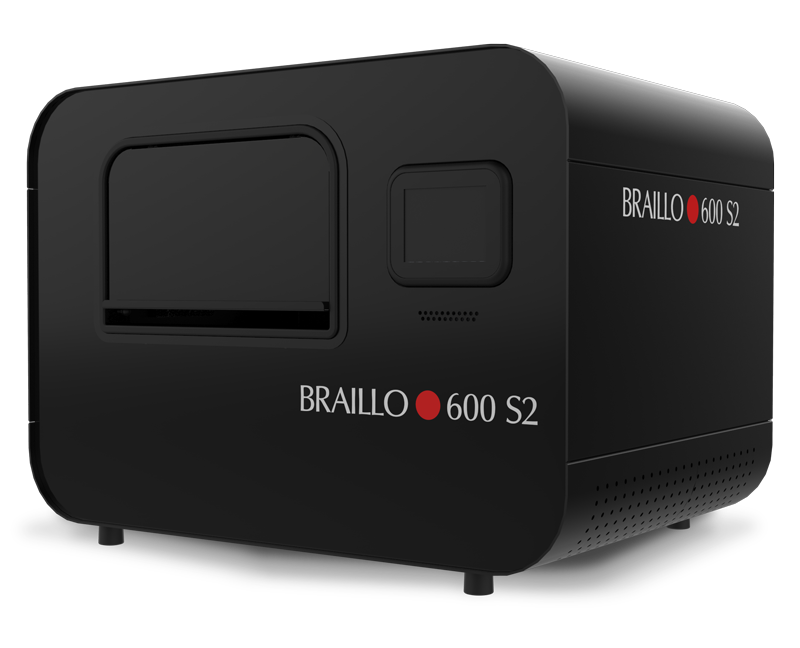
Braillo 600 S2
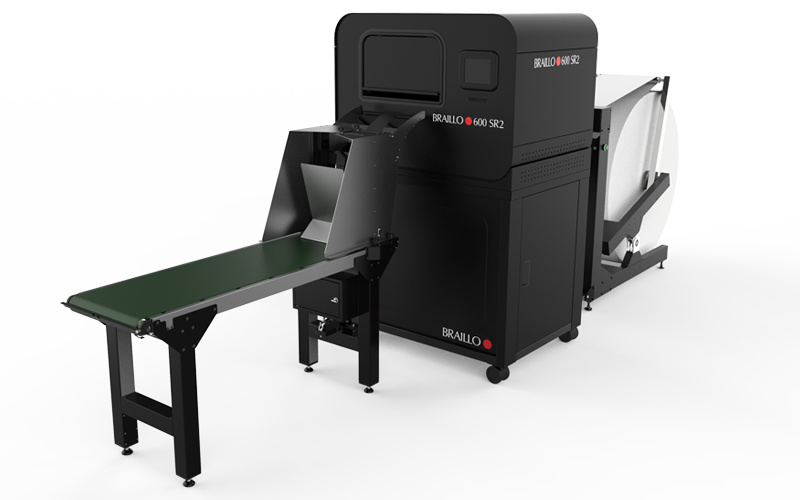
Braillo 600 SR2
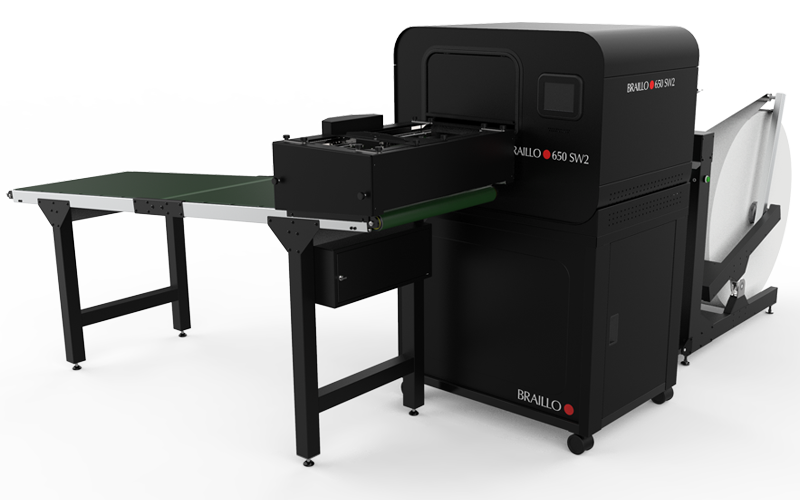
Braillo 650 SW2
Braillo 650 SF2