
How to Choose a Braille Embosser
Defining the requirements for production braille
Braille embossers used in production environments must meet defined performance requirements. These include sustained operation, consistent braille quality, and the ability to support different paper formats and workflows.
Production braille is not determined by specifications alone. It is defined by how equipment performs over time—across extended runs, under continuous demand, and within real production environments.
Production Requirements
Production environments vary widely, from smaller operations to national libraries and high-volume braille production facilities.
What defines these environments is not scale alone, but the expectation of consistent output. Braille embossers must operate continuously and deliver uniform dot quality across long production runs.
The required output volume and operating environment determine which type of braille embosser is appropriate.
What Defines a Production Braille Embosser
Not all braille embossers are designed for sustained production.
Desktop or light-duty braille printers are typically intended for intermittent use. While suitable for short documents, they are not engineered to maintain consistent braille quality or operate continuously over extended production runs.
A production braille embosser is defined by its ability to:
- operate continuously for extended periods
- maintain consistent braille dot quality across long runs
- deliver reliable, predictable performance over time
Braillo production braille embossers are purpose-built for these conditions, ensuring consistent output and dependable operation in demanding production environments.
Choose the Right Paper Format
Braille production is fundamentally shaped by paper format. Each format—continuous, roll-fed, and cut-sheet—serves a specific role depending on workflow, output type, and production volume.
Continuous Paper
Continuous braille paper provides stable handling and consistent alignment, making it the foundation of production braille for decades.
It is well suited for structured, high-speed production environments where reliability and consistency are critical. Braillo production braille embossers using continuous paper include:
Roll-Fed Paper
Roll-fed braille paper enables extended, uninterrupted production by reducing the need for frequent paper changes.
This format is ideal for high-volume environments producing books, magazines, and long documents. Braillo production braille embossers using roll-fed paper include:
Cut-Sheet Paper
Cut-sheet braille paper introduces flexibility by allowing embossing on individual sheets while maintaining production-level performance.
The Braillo 400 CS2 is the world’s first production braille embosser designed for cut-sheet paper, supporting both standard and book-format output.
Braillo is the only manufacturer delivering true production braille embossers across continuous, roll-fed, and cut-sheet paper formats—allowing organizations to select the format that best fits their workflow without compromise.
Output Format
Braille production is not limited to standard front/back (interpoint) documents. Many organizations produce business cards, labels, books, magazines, and newspapers that require structured layouts.
Selecting the correct braille embosser ensures that your output format aligns with your production goals.
- Standard front/back output is supported across all Braillo embossers, with the exception of the Braillo 650 SF2 (larger paper formats only)
- Standard front/back and magazine formats are supported by the Braillo 400 CS2 and the Braillo 650 SW2
- Fully automated, finished (stapled and folded) publications in magazine format are produced by the Braillo 650 SF2
Workflow and Automation
Production workflows vary in the level of operator involvement required.
Most environments require some level of manual handling, including collecting embossed documents, removing tractor edges when using continuous paper, and collating or binding finished materials.
Roll-fed braille embossers reduce paper handling and support longer, uninterrupted production runs compared to continuous and cut-sheet formats.
The Braillo 650 SF2 represents the highest level of automation—producing fully finished, stapled, covered, and folded braille books, magazines, and newspapers directly from the braille embosser.
A Standard Defined by Performance
In production environments, performance is not defined by specifications—it is defined by consistency over time.
A braille embosser must maintain braille quality and throughput across extended production runs while operating reliably day after day. This level of performance is required by businesses, national libraries, government agencies, and high-volume braille production facilities worldwide.
Braillo production braille embossers and braille printers are engineered to meet this standard. Every model is designed for sustained operation, consistent braille output, and long-term reliability—regardless of speed, format, or configuration.
Choosing the right braille embosser is ultimately about selecting equipment that performs as required, consistently and over time. Learn more on the Choosing Braillo page.
Long-term performance is also supported by comprehensive warranty coverage, reflecting the durability and reliability expected in production environments.
Resource Hub
For deeper insights into braille production, paper formats, and best practices, explore the full Braillo resource center.
Explore Braillo production braille embossers and braille printer models.
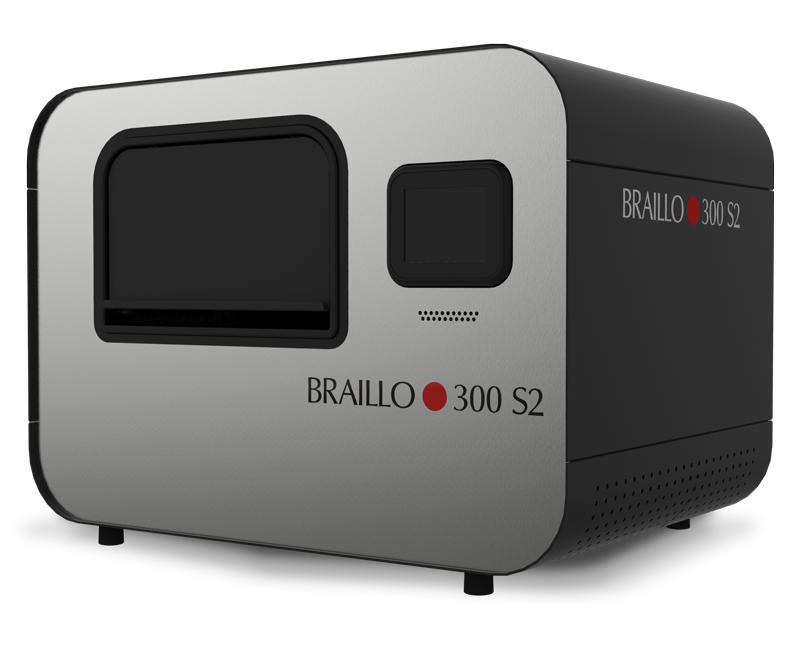
Braillo 300 S2
300 characters per second on continuous paper—an entry point into production braille.
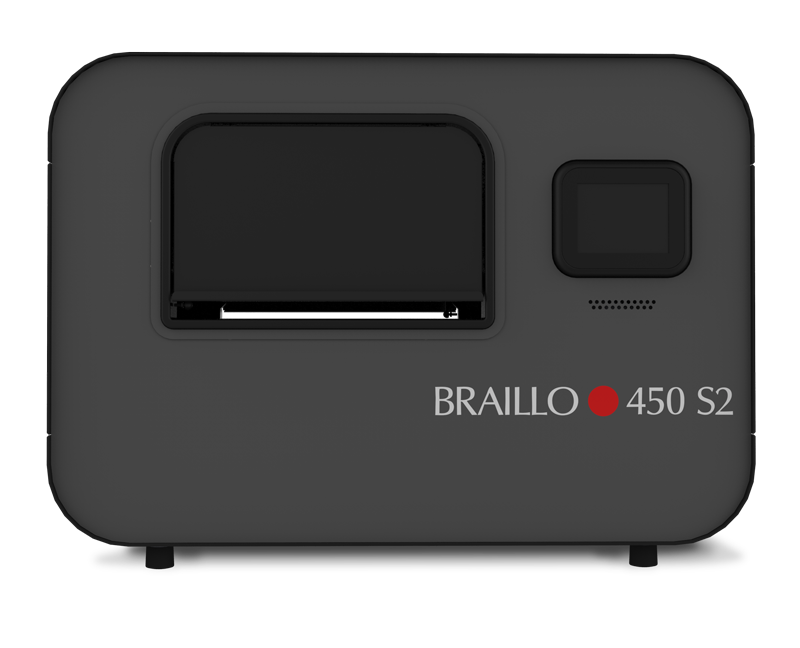
Braillo 450 S2
450 characters per second on continuous paper for growing braille production teams.
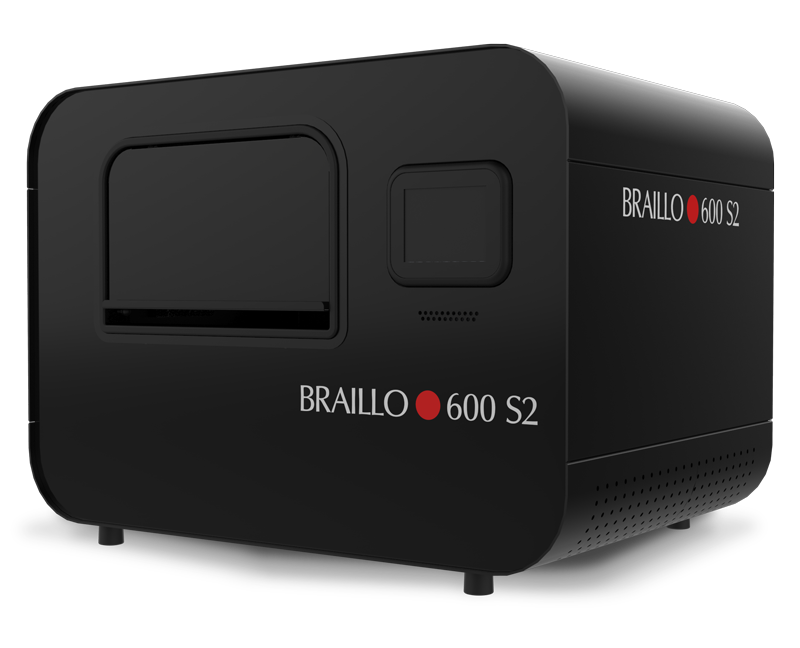
Braillo 600 S2
600 characters per second on continuous paper, with an upgrade path to the roll-fed 600 SR2.
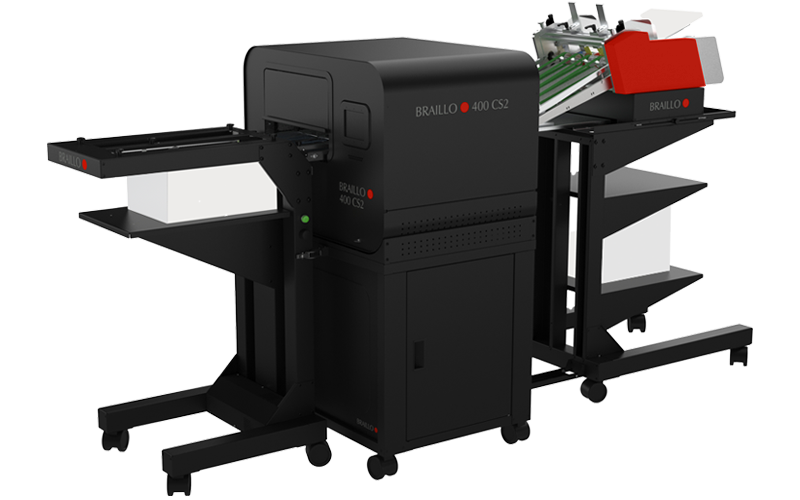
Braillo 400 CS2
400 characters per second—the only production cut-sheet braille embosser capable of multiple layouts.
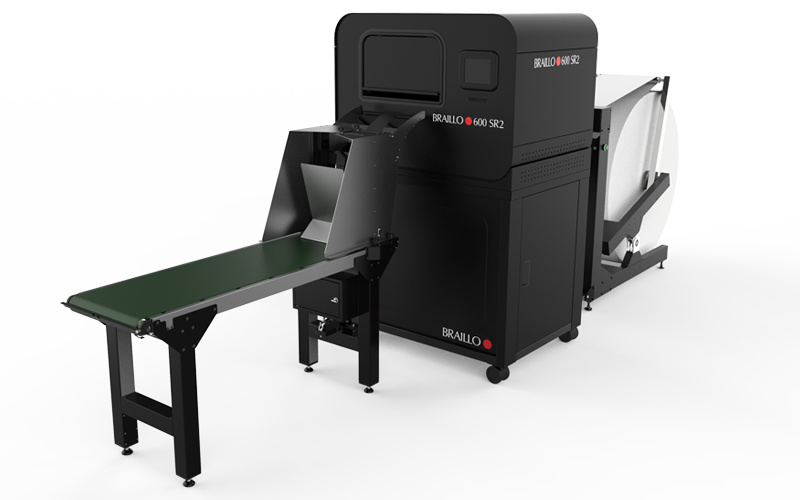
Braillo 600 SR2
600 characters per second on roll-fed paper, with automatic cutting and stacking.
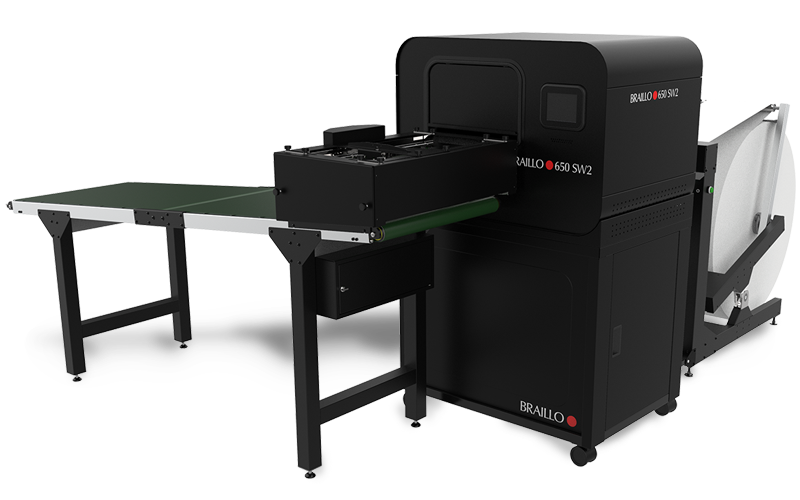
Braillo 650 SW2
650 characters per second on roll-fed paper for semi-automated book and magazine production.
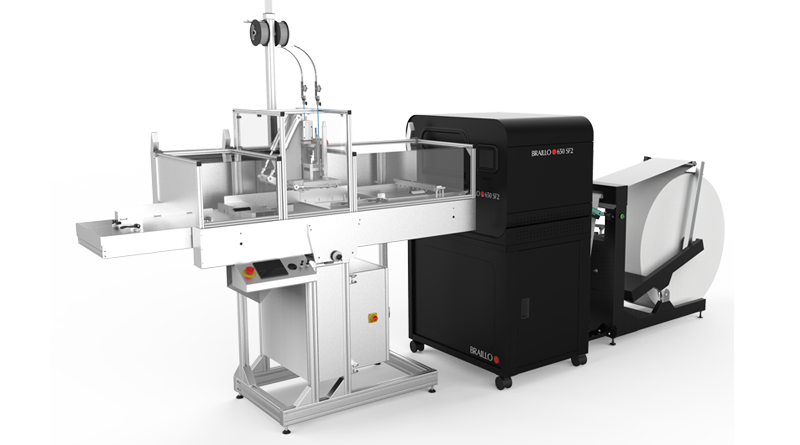
Braillo 650 SF2
650 characters per second on roll-fed paper for fully automated braille book production.
