One standard. Every format. Braillo.
Braillo defines the standard for production braille printers.
For decades, Braillo has designed and manufactured braille printers built for sustained, high-volume production. These are not desktop devices adapted for heavier use—they are purpose-built production braille printers engineered to deliver consistent braille output, operate continuously, and perform reliably over years of service.
Organizations worldwide rely on Braillo braille printers because performance is not measured at installation—it is measured over time. A production braille printer must maintain dot quality, alignment, and throughput across extended production runs. This is the standard Braillo printers are built to meet.
Braillo is the only manufacturer offering production braille printers across all braille paper formats used in production: continuous (tractor-fed), roll-fed, and cut-sheet.
What Is a Production Braille Printer?
A braille printer, also known as a braille embosser, is an impact device that produces tactile braille dots on braille paper.
Not all braille printers are designed for production.
Many braille printers on the market are desktop or personal units intended for limited use. While suitable for short documents or home and classroom environments, they are not engineered for sustained operation, consistent output over long runs, or the demands of high-volume production.
A production braille printer is defined by its ability to:
- operate continuously
- maintain consistent braille quality across long jobs
- deliver predictable, repeatable performance over time
If a braille printer cannot sustain these conditions, it is not a production braille printer.
When evaluating a braille printer purchase, it is essential to consider the following factors:
Intended Use and Duty Cycle
The intended use of a braille printer determines whether a desktop unit or a production braille printer is required.
Desktop braille printers are designed for intermittent use—typically for short durations. These devices are appropriate for limited output, such as individual documents or classroom materials.
Production braille printers are designed for sustained operation, including multi-hour daily use, multi-shift environments, and continuous production schedules. These environments require equipment that performs consistently under load, without degradation in output quality. Learn more about this in duty cycle in braille embossers.
Build Quality and Long-Term Performance
Production braille printers must be engineered for durability.
Braillo braille printers are manufactured in Stjørdal, Norway using precision components produced in-house or by certified suppliers. Each printer is designed for long-term operation, with many braille printers remaining in service for decades and producing millions of pages.
Braillo printers are also upgradeable, allowing organizations to extend the life of their equipment with modern electronics and performance enhancements. This approach ensures long-term value and reduces the need for replacement.
Braille Quality and Readability
Braille quality is the most critical factor in any braille printer.
Braille dot-height requirements vary by specification. A production braille printer must maintain the required dot height, spacing and alignment throughout each job. Learn more in our braille dot height standards guide.
Braillo printers are designed to produce uniform braille output across sustained production runs. This ensures readability, reduces strain for the reader, and maintains the integrity of the printed material.
True Production Braille
Production braille is not defined by specifications—it is defined by performance under sustained demand.
Braillo has focused exclusively on production braille printers since 1980. These printers are used by national libraries, government agencies, businesses, and large-scale production facilities worldwide.
In these environments, equipment must perform consistently day after day. Output quality must remain stable, and downtime must be minimized. This is the standard requirement for production braille printers. Learn more about what defines true production braille.
Braille Paper Formats
Braille printers must be compatible with the paper formats used in production.
Braillo production braille printers support all braille paper formats:
- continuous (tractor-fed) braille paper
- roll-fed braille paper
- cut-sheet braille paper
Braillo is the only manufacturer to support all three formats at a production level.
Braille paper should typically be between 140–150 GSM (100 lb) to ensure proper dot formation and durability. Standard office paper is not recommended for braille printing, as it cannot retain dot structure.
Translation Software
Accurate translation is essential to producing correct braille output.
Braillo printers include Duxbury Braille Translator, the industry-standard software for braille translation. This ensures accurate braille, support for multiple languages, and correct formatting.
Without professional translation software, errors in braille output are likely.
Connectivity
Modern braille printers must integrate into existing production environments.
Braillo braille printers support USB, Ethernet, and WiFi connectivity, allowing flexible integration across multiple workstations and networks.
Support and Service
Production braille requires reliable support.
Braillo provides direct technical support through phone, email, video, factory training classes, and on-site service from factory-trained technicians. This ensures that Braillo braille printers remain operational and perform as required.
Investment in a Production Braille Printer
A production braille printer is, or at least should be, a long-term investment.
Organizations purchasing braille printers are often making significant financial commitments. Equipment must perform as specified, operate reliably over time, and deliver consistent output without interruption.
Braillo printers are built to meet these expectations. They operate as intended, maintain performance over time, and provide a reliable foundation for braille production.
There is also a pre-purchase checklist recommended before purchasing any braille printer. You can review it here: braille printer pre-purchase checklist.
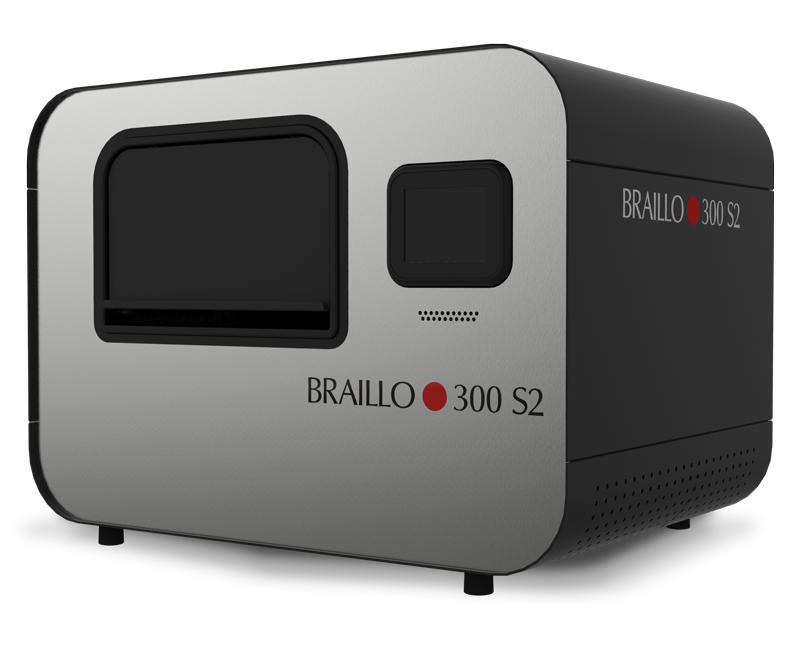
Braillo 300 S2
300 characters per second on continuous paper—an entry point into production braille.
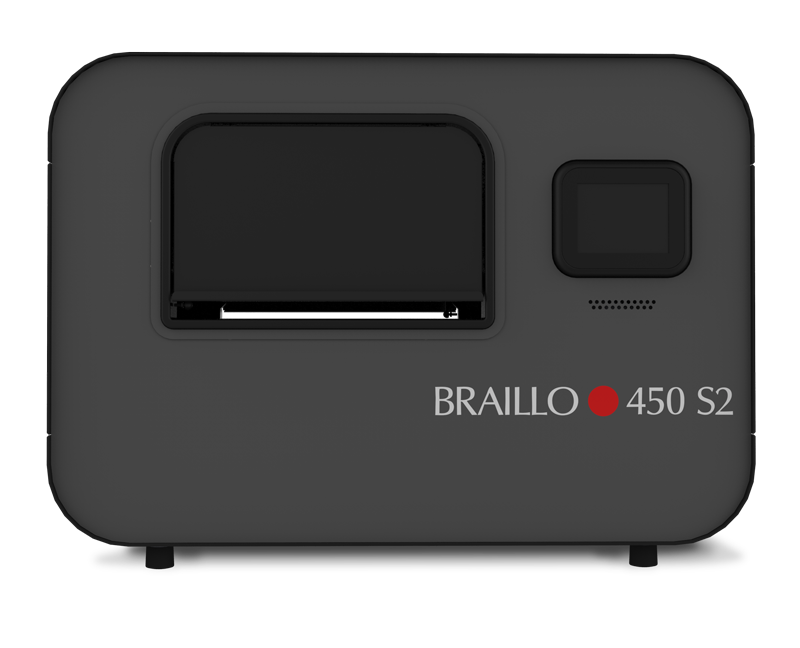
Braillo 450 S2
450 characters per second on continuous paper for growing braille production teams.
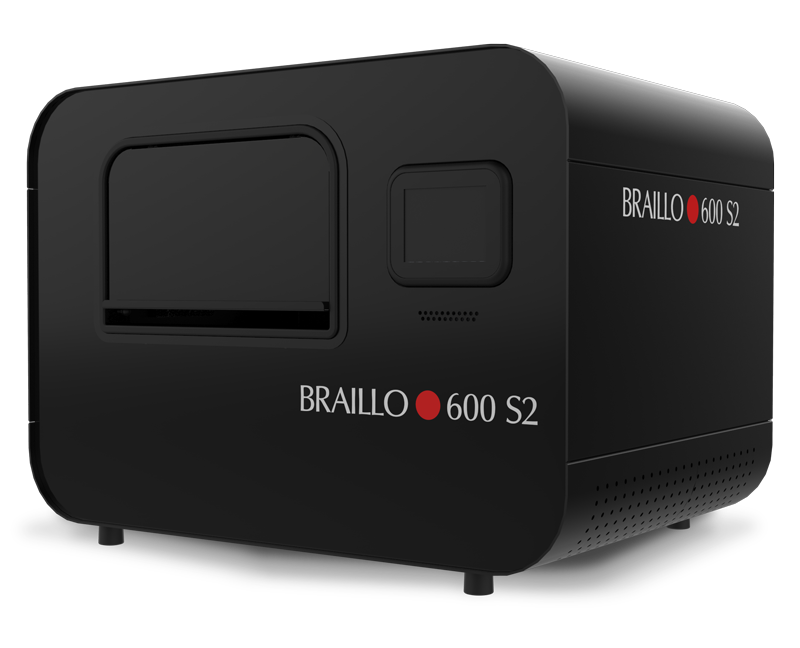
Braillo 600 S2
600 characters per second on continuous paper, with an upgrade path to the roll-fed 600 SR2.
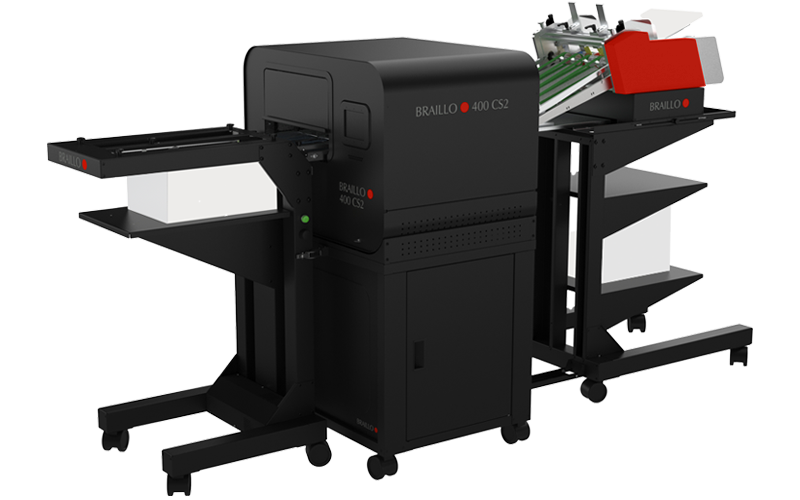
Braillo 400 CS2
400 characters per second—the only production cut-sheet braille embosser capable of multiple layouts.
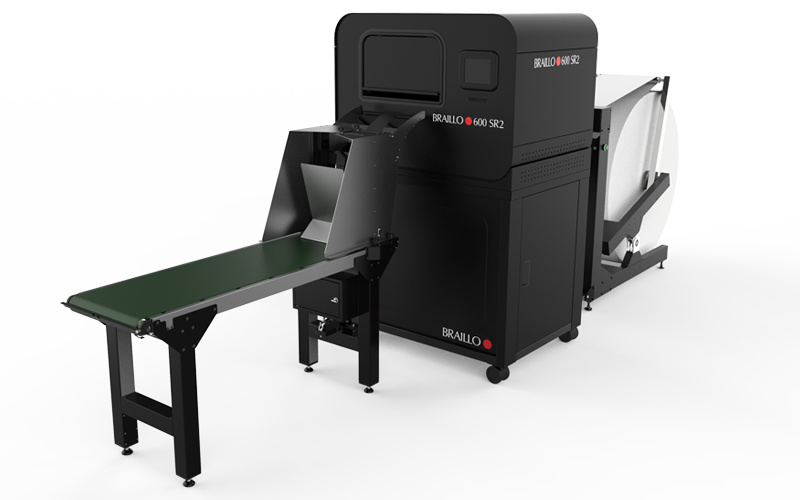
Braillo 600 SR2
600 characters per second on roll-fed paper, with automatic cutting and stacking.
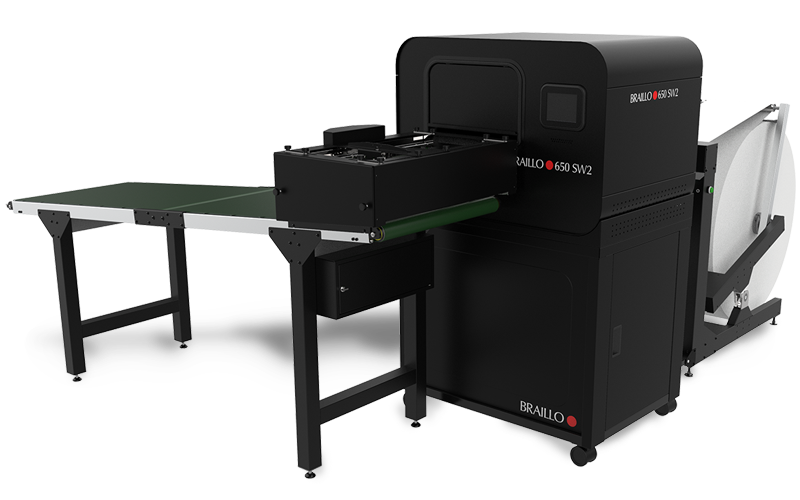
Braillo 650 SW2
650 characters per second on roll-fed paper for semi-automated book and magazine production.
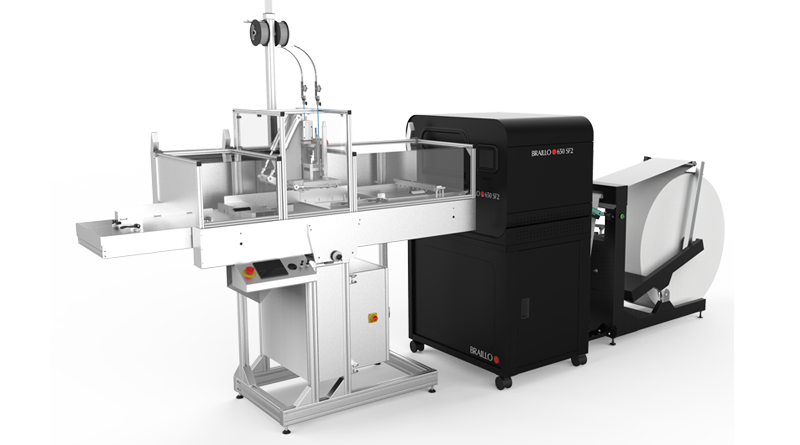
Braillo 650 SF2
650 characters per second on roll-fed paper for fully automated braille book production.